About this document
This Technical Note examines how warpage left after molding disturbs solder ball mounting and board-level joints in fine-pitch FCCSP. It describes a process that restores flatness outside the mold through reheating, pressing and constrained cooling.
Download
An English edition is not available yet. The Korean document is below.
Summary
As solder balls shrink and pitches tighten, warpage left after molding turns into joint defects. Today it is corrected by stacking packages under weight bars and baking them in an oven for hours. The note covers a process that thins the EMC around the chip with a PDA surface treatment and, right after molding, reheats, presses and cools the package under constraint in a single cycle outside the mold.
Conclusion
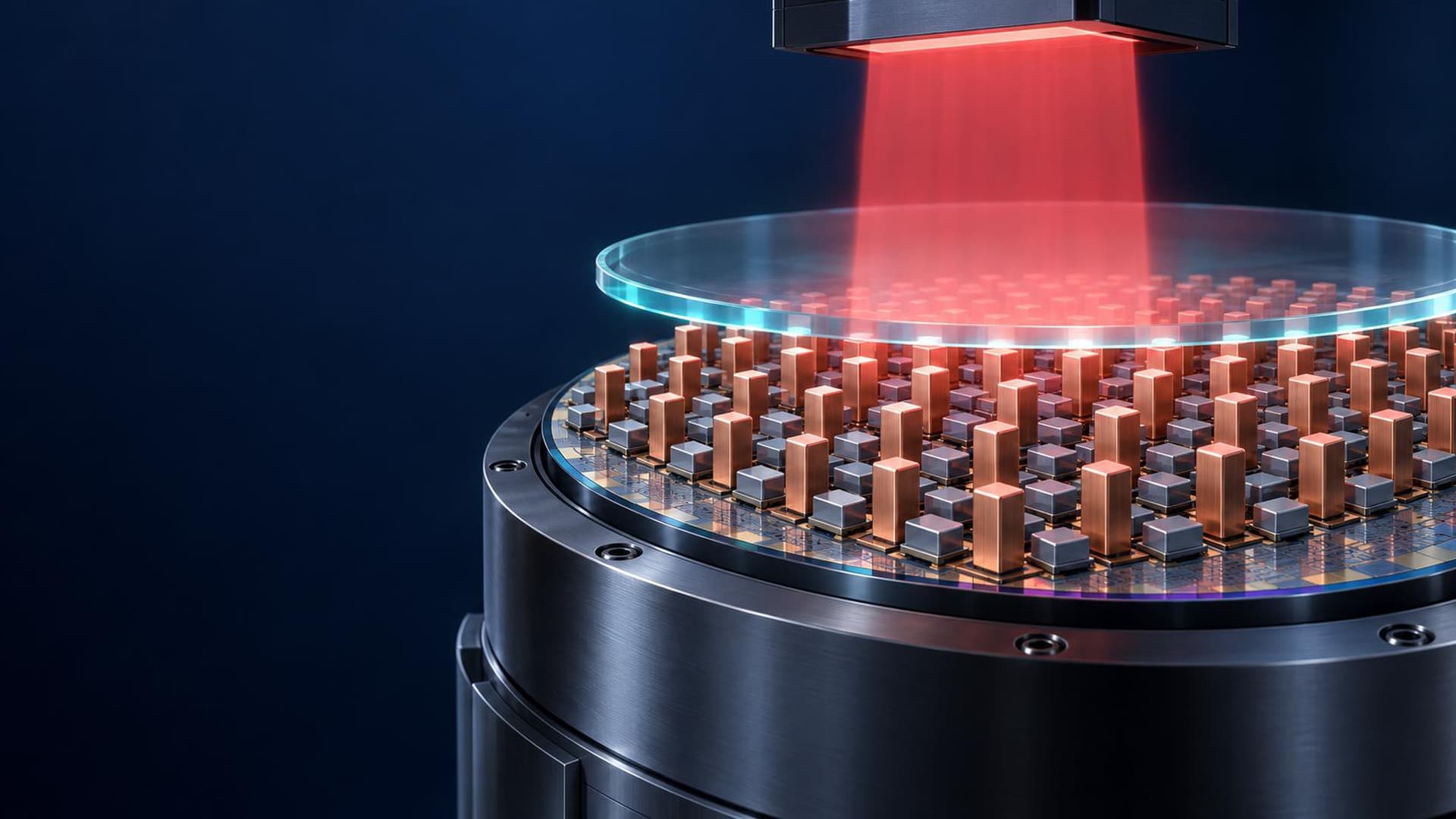
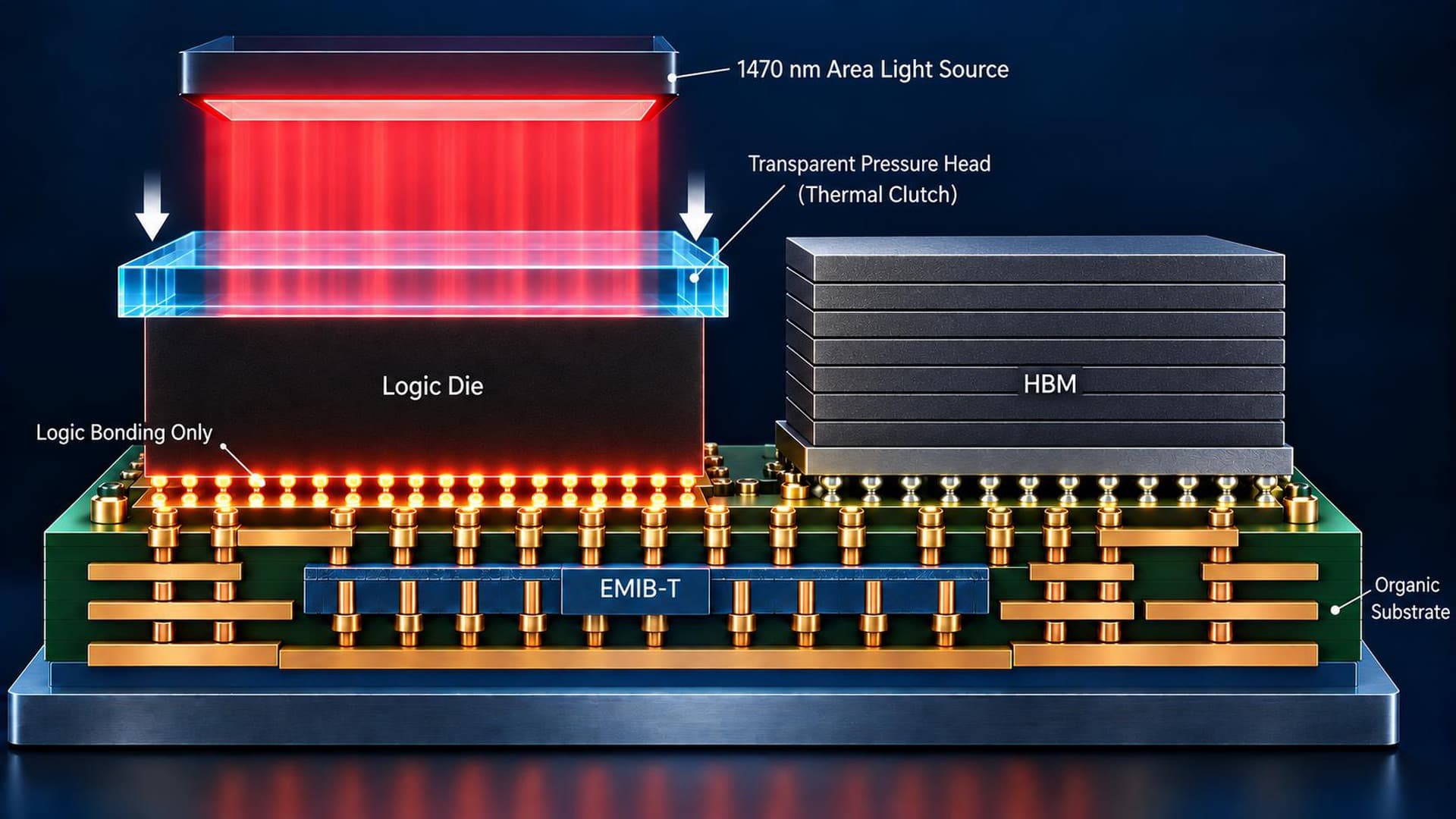
Smaller solder balls and finer pitches are raising the flatness requirement for FCCSP. Warpage left after molding causes height variation and uneven joints at solder ball mounting, and the package must still stay within joint flatness limits after the heating and cooling of system-board reflow. The current customer process stacks packages, places weight bars on them and corrects them in an oven for several hours before unloading. The approach moves warpage correction into the molding line. It starts with the structure: a PDA surface treatment on the lid interior and the substrate contact surface improves wetting and interfacial adhesion, and the EMC under the lid around the chip is thinned to about 100 μm (design target). With less resin to heat and cool, the thermal response is faster and a short flattening cycle becomes possible. The process has three steps: transfer molding, out-of-mold reheating and pressing, and constrained rapid cooling. Once the strip has enough demolding strength, it moves to a module outside the mold and uses the residual heat from molding. A conformal head combines a transparent alumina upper part with a shaped quartz lower part; laser light is converted to heat in a photothermal film at the quartz contact face and passes through the lid into the EMC. Reheating conditions are controlled while the package is held flat under pressure, relaxing EMC stress. After the laser is switched off, pressure is held while heat is removed, and it is released once the target cooling condition is reached. The development target for one cycle of the external module, including loading, processing and unloading, is 15 seconds or less. Completion requires flatness after pressure release and joints that stay within limits after the thermal history of later reflow. Any post-cure the material needs is managed separately. Existing molding equipment stays in place with only a flattening module added outside the mold, and the approach can extend to large FCCSP and molded multi-chip packages.
Topics
- Thermal control
- Packaging