- Why is cooling the bottleneck in thermocompression bonding?
- More than half of a thermocompression bonding cycle is cooling, and the pace is set by air convection. The Thermal Clutch lifts the cooling body away while the head is heating so no heat is lost, then puts it back in contact once the bond is complete, handing the path to solid conduction.
- How much can the bonding cycle be shortened?
- First validation cut the bonding cycle by 51%, from 7.0 to 3.4 seconds, measured at equal bond quality.
- Can hybrid bonding avoid heating the whole wafer?
- Hybrid bonding heats an entire wafer for 0.5 to 4 hours to complete the Cu bond, even though the heat is needed only within a few micrometres of the interface. Light at 1500 nm sits in a band where interband absorption in silicon is suppressed, so it passes through the substrate and turns into heat for nanoseconds only in a thin absorbing layer behind the pad. The approach changes where and for how long heat is applied, not how hot it gets.
- What causes interface delamination and fill defects in glass substrates?
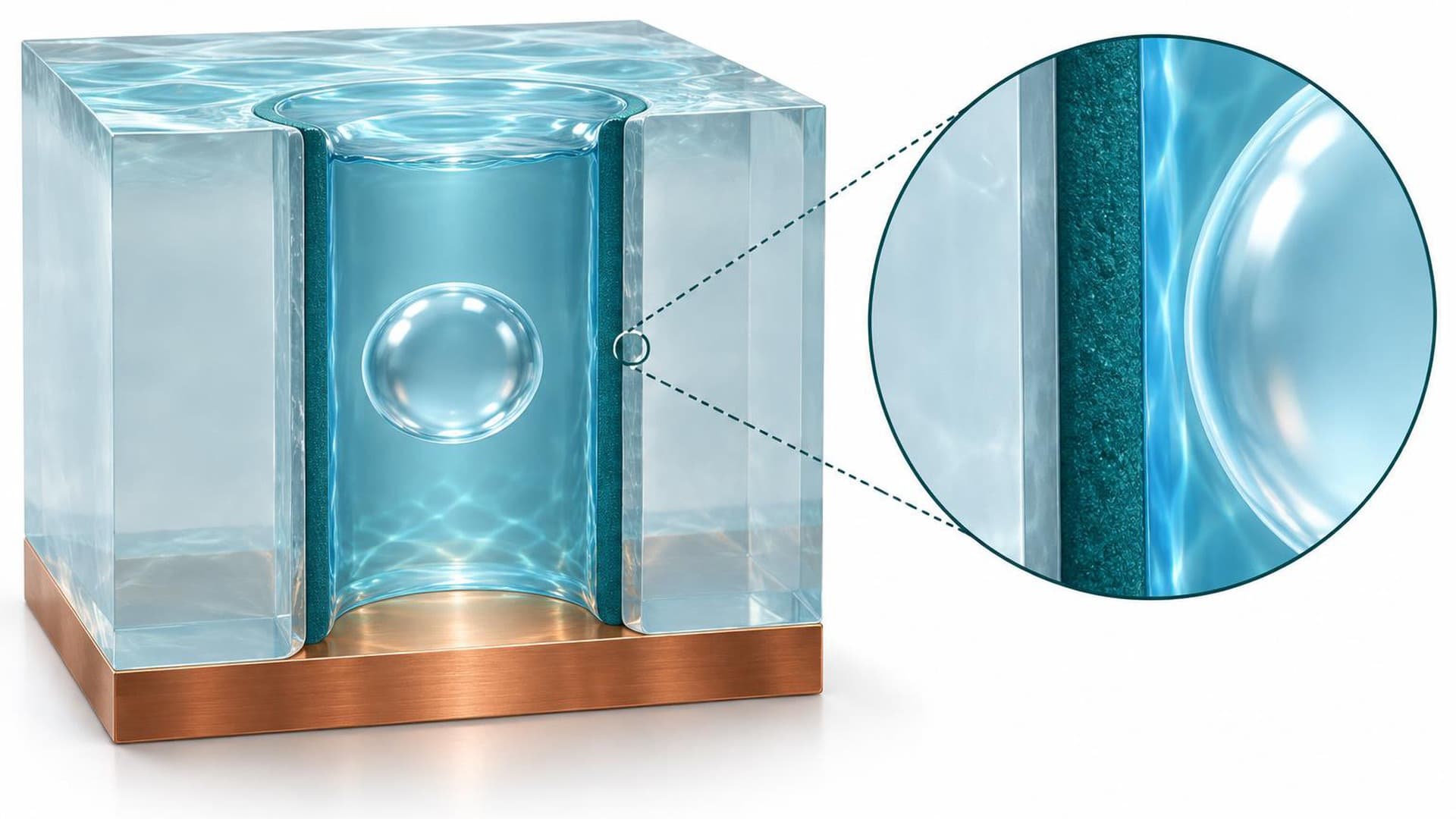
- They all start where glass and copper fail to bond. Building a continuous interface down the full sidewall of a through-glass via first, then propagating the electrode along it in sequence, produces metallisation without voids.
- Can it be adopted without replacing existing bonding equipment?
- Yes, through module and component supply. Functional modules such as the Thermal Clutch are supplied to existing equipment, which carries the lowest initial investment. The three adoption paths are module and component supply, equipment and process solutions, and IP licensing.
 Technical notePower semiconductors